01 / 05
Consultation and scan
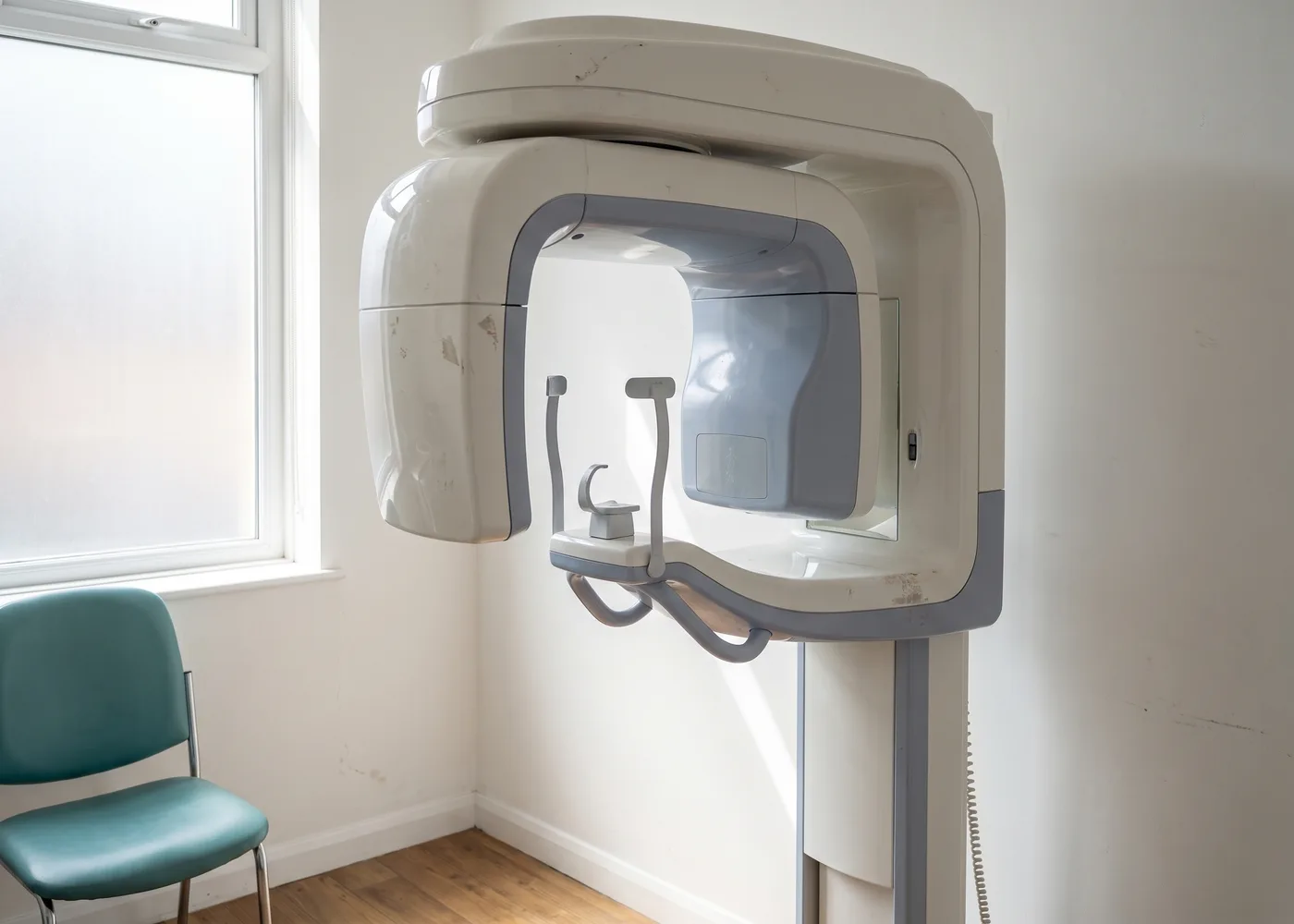
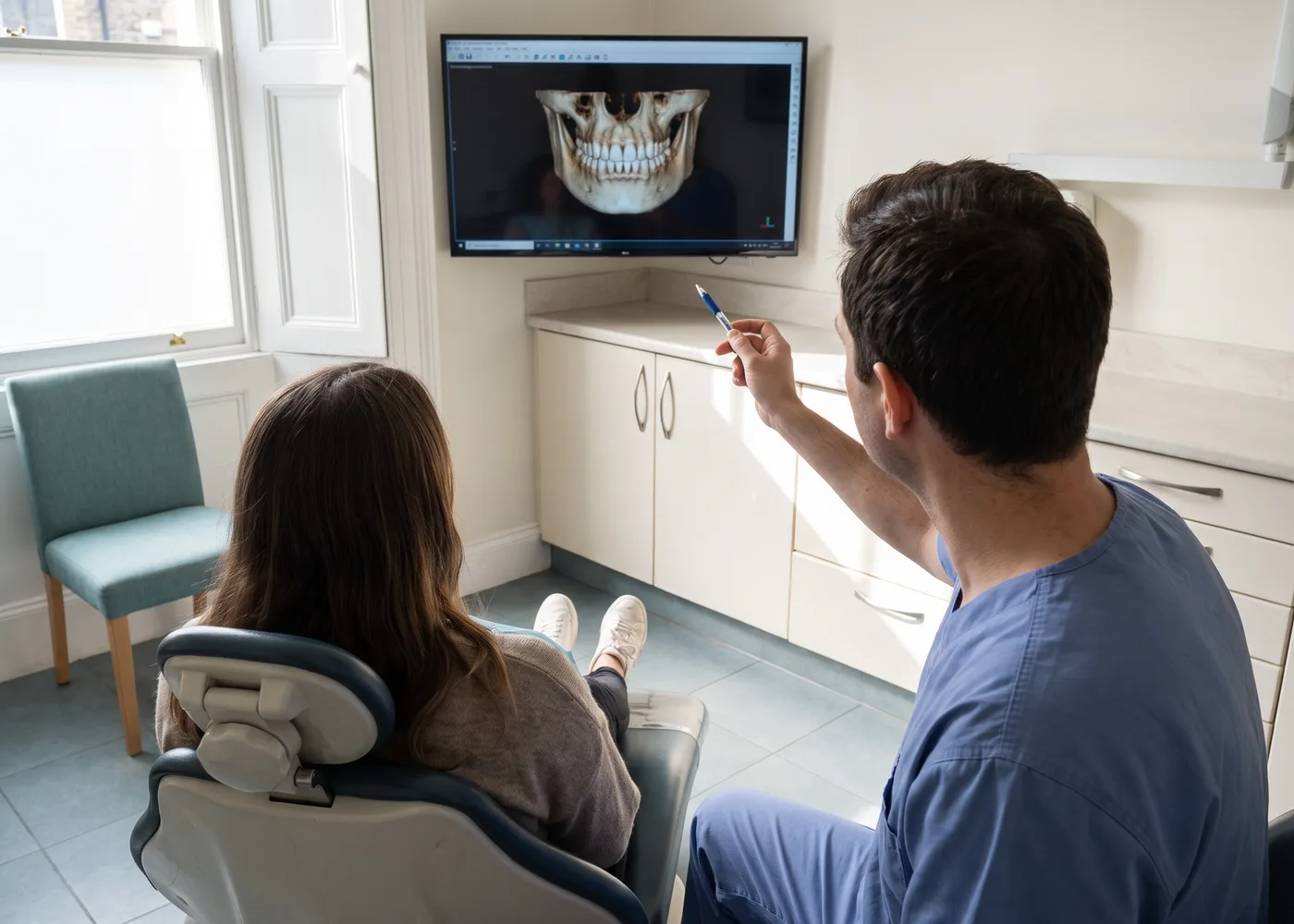
About 45 minutes. We take a CBCT scan, which shows the bone in three dimensions rather than the flat picture an ordinary x-ray gives. It is the difference between planning and guessing.
Implant treatment is measured in months, not appointments, and the practices that do not say so are the ones to be careful with. The whole timeline is below, including the waiting, before you have spoken to anybody.
A scan shows the bone in three dimensions. An ordinary dental x-ray is a flat picture, and planning an implant from one is possible in the way that parking by sound is possible.
We take a CBCT scan at the first appointment and talk you through it while it is on the screen, rather than turning the monitor round at the end. It shows how much bone is there, and how close the nerve and the sinus sit to where an implant would go.
It also tells us when the answer is no. About one consultation in six ends with us recommending against treatment, and you will hear the reason rather than a softer version of it.
How long it actually takes
Pick a treatment. The top rail is how it runs when everything goes smoothly, the bottom rail is the same plan when it needs longer. Both are drawn on the same months, so the gap between the two ends is the honest uncertainty rather than a number we have rounded in our favour.
A single gap, one implant, one crown.
The healing figure is osseointegration, the period in which bone grows onto the implant surface and locks it in place. 12 to 24 weeks is the ordinary published range, longer in the upper jaw than the lower and longer again where a graft has been done. It cannot be shortened by paying more.
Published long-term studies report implant success at 95 to 98 per cent at ten years, in published long-term studies. That is a figure about a population, not a promise about you: smoking, uncontrolled gum disease and diabetes all move it, and we will say where you sit on your own consultation rather than quote you the average.
These are typical ranges for planning, not a clinical opinion about your mouth. Nobody can give you that from a web page.
A price given before a scan is a guess with a number on it. Quoting first and discovering the bone afterwards is how a patient ends up being told, with a deposit already paid, that the plan has changed.
How we work
About 45 minutes. We take a CBCT scan, which shows the bone in three dimensions rather than the flat picture an ordinary x-ray gives. It is the difference between planning and guessing.
What is possible, what it involves, how long it takes and what it costs, on paper before you decide anything. Including the option of not having treatment, where that is reasonable.
Usually under local anaesthetic, usually an hour or two. Most people work the next day, and we will say so plainly rather than overstate the recovery.
Three to six months while the implant integrates with the bone. You are not without a tooth during this time; a temporary is fitted where the site allows one.
Made to match the teeth either side, fitted, then reviewed. After that it is an ordinary check-up and hygiene appointment like any other tooth.
Treatments
Which one is right is decided by the scan rather than by the number of gaps you can see in the mirror. Sometimes the answer is none of them, and a bridge or a denture is the better piece of dentistry.
One implant, one crown, without touching the teeth either side of the gap.
Several teeth replaced on fewer implants than teeth, where the bone allows.
A fixed full arch on four to six implants, for patients with failing or absent teeth.
Rebuilding the site first, when the scan says there is not enough to work with.
What people actually ask
Placement is done under local anaesthetic and is usually less uncomfortable than an extraction. Afterwards most people describe an ache for two or three days managed with ordinary painkillers. A small number find it harder than that, and we would rather you heard both halves of that sentence from us.
Three to six months from placement to the permanent crown, because the implant has to integrate with the bone and that cannot be hurried. If grafting is needed first, add several months to that. Anyone offering you a finished result in a fortnight is describing something other than what we do.
Published long-term studies report success rates around 95 to 98 per cent at ten years. That is a population figure rather than a promise about you, and it depends heavily on cleaning, smoking and whether gum disease is under control. We will be specific about your own risk factors at the consultation.
Age itself is rarely the deciding factor. General health, medication, smoking and bone volume matter far more, and we assess all four before recommending anything. We do decline treatment where the risk is not justified, and we will explain why rather than simply saying no.
A standard dental x-ray is a flat image. A CBCT scan shows the bone in three dimensions, including how close the nerve and the sinus are to where the implant would go. Planning an implant without one is possible and we do not think it is good practice.
We publish ranges rather than a headline figure, because a single implant with an uncomplicated site and a full arch with grafting are not the same product. You get a written cost for your own plan at the consultation, before you are asked to commit to anything.
What patients say
They told me at the consultation that I needed a graft first and that it would add five months. Another practice had quoted me a date three weeks away. I am glad I listened to the one that slowed me down.
The scan was on the screen and he talked me through what he was seeing rather than turning it round at the end. First time a dentist has explained anything to me like that.
Two visits combined into one because of the drive, without us having to ask. Small thing, made a real difference.
Where patients come from
Treatment means several visits spread across months, so where the drive is long we combine the consultation and the scan into one appointment and say so when we book.
Our practice is here, a short walk from the village.
Ten minutes by car, and on the same bus route as the practice.
North of the centre, with parking on the surrounding streets.
A short drive, and the route most of our north Bristol patients take.
Twenty five minutes down the M5, which is why we group appointments where we can.
A regular route for us, and worth combining the scan and the consultation in one visit.
Half an hour north, and the same advice about combining visits applies.
Further, and worth the drive only if you want this specific team. Say so and we will be honest about it.
A 45 minute consultation, a 3D scan, and a written plan with a cost on it. If implants are the wrong answer for you, that is what the plan will say.