Single tooth implants
One implant, one crown, without touching the teeth either side of the gap.
A bridge takes its support from the healthy teeth on either side of a gap, which means preparing two sound teeth to replace one missing one. An implant does not. It is the reason we suggest one for a single gap in most cases, and the reason a bridge is still sometimes the better answer when the neighbouring teeth already need crowns.
Consultation and scan
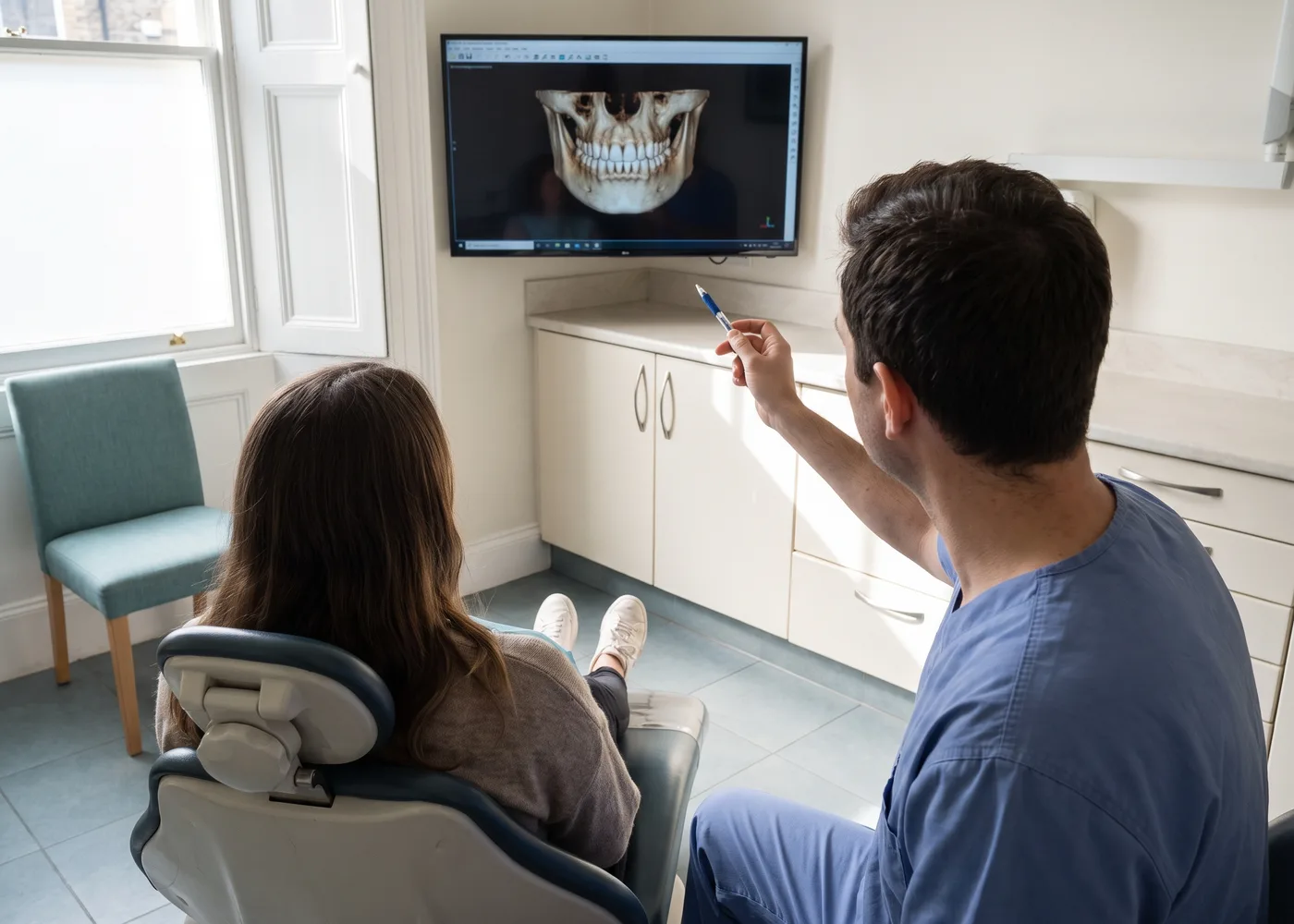
About 45 minutes. We take a CBCT scan, which shows the bone in three dimensions rather than the flat picture an ordinary x-ray gives. It is the difference between planning and guessing.
The plan, in writing
What is possible, what it involves, how long it takes and what it costs, on paper before you decide anything. Including the option of not having treatment, where that is reasonable.
Placement
Usually under local anaesthetic, usually an hour or two. Most people work the next day, and we will say so plainly rather than overstate the recovery.
Healing
Three to six months while the implant integrates with the bone. You are not without a tooth during this time; a temporary is fitted where the site allows one.
The permanent crown
Made to match the teeth either side, fitted, then reviewed. After that it is an ordinary check-up and hygiene appointment like any other tooth.
Asked often
Does it hurt?
How long does the whole thing take?
How long do implants last?
Am I too old for this?
Multiple implants and bridges
Several teeth replaced on fewer implants than teeth, where the bone allows.
Full arch treatment
A fixed full arch on four to six implants, for patients with failing or absent teeth.
Bone grafting and sinus lifts
Rebuilding the site first, when the scan says there is not enough to work with.